Impactive AI: Turning Forecast Errors Into a Cost You Can See 임팩티브AI: 예측 오차를 눈에 보이는 비용으로 바꾸는 AI
Meet Impactive AI, the explainable-AI startup rewriting demand forecasting in the language of cost, not just accuracy.비용의 언어로 수요예측을 다시 쓰는 설명가능 AI 스타트업

The birth of an AI-driven demand forecasting company
In July 2021, one researcher drew attention by winning the Best Paper Award from the Korean Society of Management Science and Technology for his work on machine learning-based technology adoption forecasting. He is Professor Jung Doo-hee of Handong Global University’s AI Convergence program, who has spent his career studying AI-based demand forecasting.
After presenting the technology, Professor Jung was flooded with urgent inquiries from companies: “Please, solve the inventory problem we’re facing right now.” According to an MIT Sloan Management Review survey, 64% of manufacturers suffer inventory losses, and despite more than 50 years of research on the topic, the producer inventory index has only kept climbing, with the problem getting worse every year. Inventory issues ripple far beyond logistics, shaking up sales, production, cost, and marketing across an entire company — yet no solution on the market was properly addressing it.
To close this gap and tackle the industry’s toughest problem, Professor Jung founded the AI solutions company Impactive AI. Under the mission “to solve the world’s critical problems and create remarkable value through technology,” Impactive AI chose to focus on the single starting point of every management decision: forecasting.
Impactive AI’s core AI solution, Deepflow, delivers precise analytical data tailored to each company’s forecasting needs. Demand forecasting isn’t just about hitting a sales number — it’s the starting point for a company’s inventory, production, purchasing, and marketing decisions. That’s why Deepflow’s precise forecasts do more than prevent short-term inventory loss; they’re driving a chain reaction of structural improvement across entire organizations.
Impactive AI’s forecasting platform, Deepflow
Behind this problem-solving journey, which began with inventory and demand forecasting, is Deepflow — Impactive AI’s own AIaaS (AI as a Service, meaning AI delivered as a subscription) platform. Deepflow is an AI platform that forecasts shifts in demand and raw material prices to support production, inventory, and purchasing decisions.
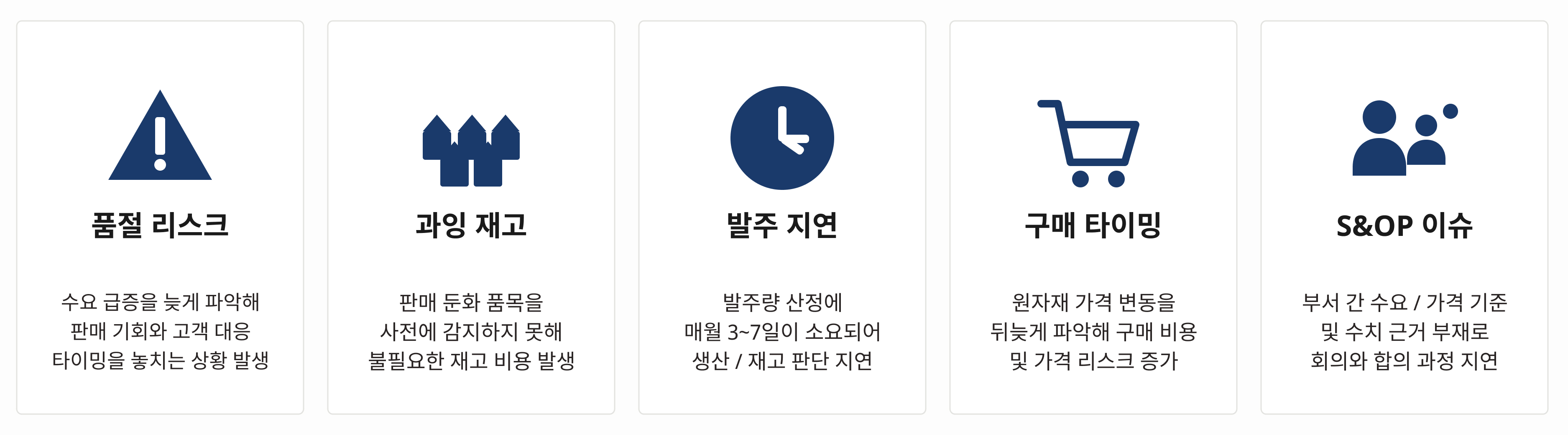
Figure 1. The limits of conventional forecasting methods, illustrated through five recurring risks — adapted from Deepflow’s product materials.
The problem Deepflow set out to solve is a concrete one. Companies are stuck repeating high-stakes production, inventory, and purchasing calls amid uncertain demand and price swings. The typical culprits: “stockout risk,” where a surge in demand is spotted too late and sales opportunities slip away; “excess inventory,” from failing to catch a slowing item ahead of time; “order delay,” where simply deciding how much to order eats up 3 to 7 days every month; and mounting “purchasing cost burden,” from catching raw material price swings too late. Different departments also work from different assumptions about demand and price, with no shared numbers to anchor the conversation — which is exactly why so-called S&OP (Sales & Operations Planning, the meeting where sales and production teams align on demand and supply plans) meetings so often stall out waiting for consensus. As long as demand and price decisions still lean on experience and gut feeling, these problems are bound to keep repeating.
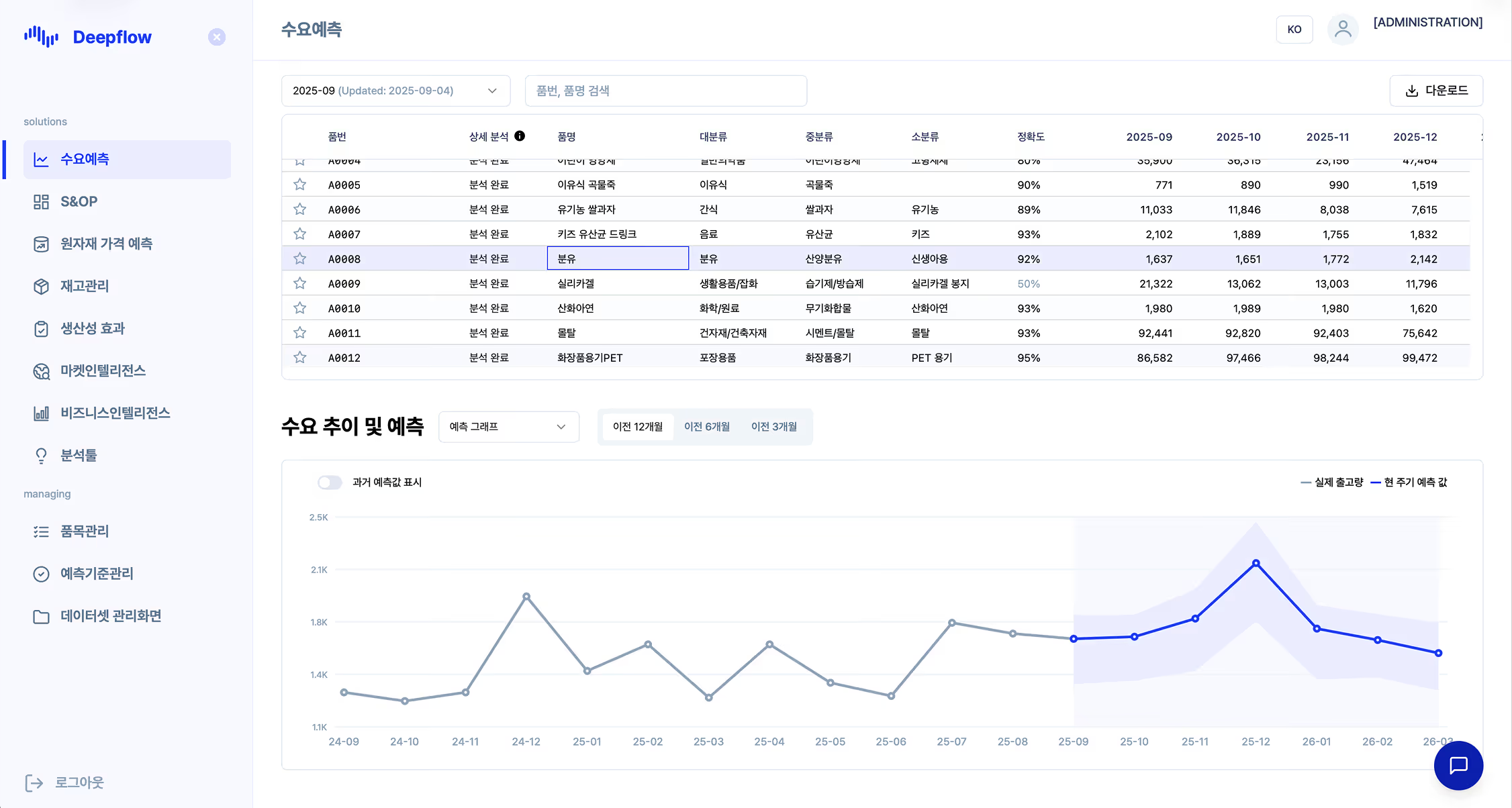
Figure 2. Deepflow’s demand forecasting screen.
Deepflow packs two functions built to solve exactly these problems.
✔︎ Deepflow Forecast
Deepflow Forecast predicts product demand and connects that forecast directly to inventory and production decisions. Out of 224 forecasting algorithms, it selects whichever model fits each individual SKU (Stock Keeping Unit, the smallest unit used to track inventory) best, learns from its sales and shipment patterns, and reports how many days of stock remain and which items carry the highest risk of running short or piling up. By giving everyone a shared, AI-generated number to work from, it streamlines S&OP meetings, links directly to inventory so issues surface immediately, and even produces a report explaining which factors drove a given forecast.
✔︎ Deepflow Materials
Deepflow Materials predicts raw material prices and turns that into purchasing decisions. It learns over a decade of price movement for minerals and agricultural resources — iron ore, nickel, coal, soybeans, and more — alongside external factors like the economy, supply, and demand, drawing on credible data from the actual international markets where these materials trade, such as the Chicago Mercantile Exchange (CME) and the London Metal Exchange (LME). On top of this, it uses a proprietary metric called the “Impact Score” to weigh how much each factor moved the price and how, even accounting for time-lagged effects, to pin down what’s really driving today’s price. By analyzing both product and raw material data, it delivers insights and generates market analysis reports drawn from more than 200 data sources — and is being developed further toward recommending future decisions.
The impact of these two functions on the ground is unmistakable. The time it takes to draft an initial order quantity has dropped from a full day to 7 minutes, meeting efficiency is up 55%, and order decision time is down 30%. Inventory imbalances have fallen by an average of 33.4%, with one steel company confirming 21 billion KRW in inventory asset savings and one pharmaceutical company confirming 2.48 billion KRW. In the end, Deepflow is less a tool that spits out forecasts and more a system that carries those forecasts all the way through to operational decisions.
The effort to secure AI explainability
Even so, for Deepflow’s forecasts to actually guide operational decisions, there’s one more hurdle to clear: the difficulty of explaining why AI arrived at a given decision — so-called “unexplainability.” It’s the single biggest reason many companies hesitate to adopt AI at all. That’s why Impactive AI made “Explainable AI (XAI)” a core priority — not just producing outputs, but surfacing the process and reasoning behind them. The goal was to move past black-box models (models whose internal calculations are difficult for people to trace) and build a system that can explain which factors shaped each stage of a decision.
This goal took shape across five stages: data, model design, training, validation, and operation.
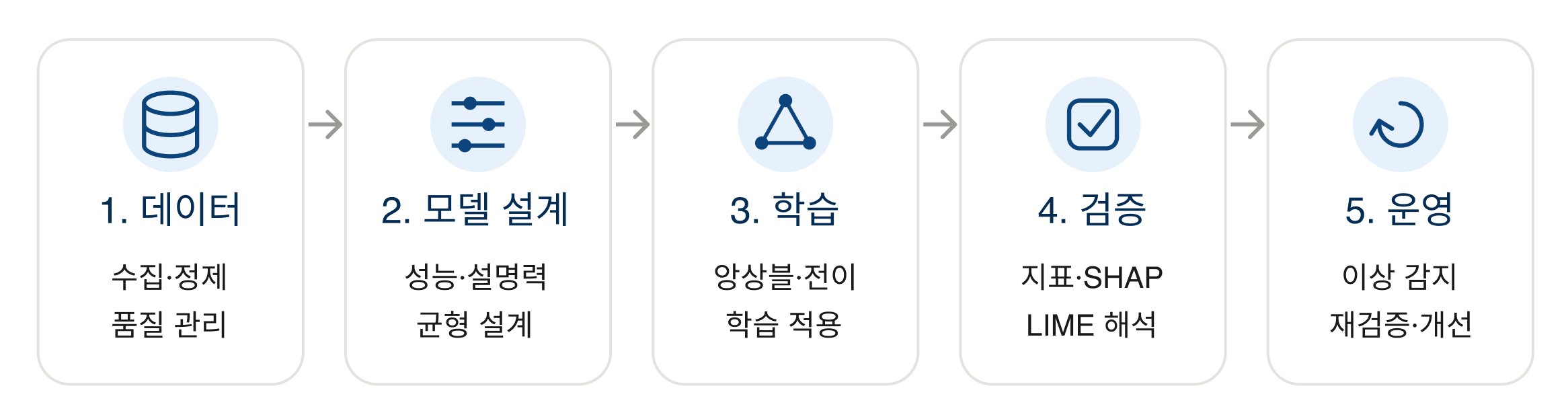
Figure 3. Deepflow’s process for securing AI explainability.
1 Data: collection, cleaning, and quality management
The first stage is data. Impactive AI collects data under three principles — representativeness, diversity, and fairness — and runs it through cleaning: filling missing values, filtering out outliers, and standardizing units. It has also built a dedicated pipeline that automatically monitors and improves data quality.
2 Model design: balancing performance and explainability
The more complex a model gets, the sharper its predictions become — but the harder it is to explain why it reached a given conclusion. Balancing complexity against performance is essential here. Impactive AI uses techniques like grid search and Bayesian optimization (methods for automatically searching for the best hyperparameters, the settings that govern a model’s predictive performance) to find optimal configurations, and evaluates performance through cross-validation (a method that repeatedly splits data into training and testing sets to check how well a model generalizes).
3 Training: ensembles and transfer learning
Once the design is set, training begins in earnest. At this stage, Impactive AI applies several techniques to boost performance without sacrificing explainability. It combines multiple models to offset each other’s weaknesses (ensemble methods), and uses models already trained on other data as a starting point — helping avoid overfitting even for new products with little sales history (transfer learning). It has also reduced the model’s computational load to improve execution speed (compression and quantization).
4 Validation: metrics and SHAP/LIME interpretation
A trained model is immediately put through validation. Its performance is checked against metrics like accuracy, precision, and recall, while interpretation tools like SHAP and LIME dissect its decision process. SHAP quantifies how much each factor influenced a given prediction, while LIME approximates a complex prediction with a linear model to make it easier for users to understand. Fairness is checked alongside this — examining whether the model produces biased outcomes across sensitive traits like gender, age, or race. Domain experts also participate regularly, verifying that these explanations are genuinely valid and useful in practice.
5 Operation: anomaly detection, revalidation, and improvement
Monitoring continues even after the model goes live. An automated anomaly-detection algorithm catches early signs of performance decay, and the model is revalidated every month with new data. “Drift” — the gradual gap that opens up between a model’s predictions and reality over time — is monitored separately. User feedback is automatically classified and fed back into a model-improvement cycle every two weeks.
Where all of this — from data collection to operational monitoring — is headed is clear. AI isn’t meant to be a tool that replaces the work; it’s meant to hand over a draft that users refine with their own expertise and experience. In Impactive AI’s vision, AI ends up less a stand-in for people and more a partner that helps them make better decisions.
Forecasts should be measured in cost, not error rate
Why Deepflow invests so heavily in explainability comes into sharper focus in a recent insight Impactive AI published. Many companies, once a demand-forecasting project wraps up, walk away with a result showing MAPE (mean absolute percentage error) improved by a few percentage points. But look at the books a few months later, and the sales lost to stockouts, the inventory piling up in the warehouse, and the write-off costs often haven’t budged much. That’s because error rate and the cost of that error aren’t the same number. A 10% error can mean wildly different actual losses depending on whether it was an underestimate or overestimate, which SKU it happened on, and whether it landed at a moment — like a seasonal transition — when there’s no room left to recover. For a company with 10 billion KRW in monthly revenue, Impactive AI’s calculation shows that a single 10% error can translate into an annual loss of 6 billion KRW.
That’s why Impactive AI insists that forecasting can’t stop at producing a number — it has to track how, and in which direction, that forecast diverged from actual demand, and trace whether it led to stockout, excess inventory, or write-off costs. This sits on the same logic as the explainable AI system described above: it’s not enough to explain the reasoning behind a forecast — you also need to be able to trace what cost resulted when the forecast missed. Only then does a forecast become something operations teams can actually trust and use. Viewing forecast performance through the cost of error, rather than the error rate itself, is the next question Impactive AI is putting on the table.
The future of demand forecasting that Impactive AI envisions
Building on this distinctive value proposition, Impactive AI continues its steep growth trajectory. In 2025, it raised a Series A round of 8.2 billion KRW and was selected for both the “Ultra-Gap Startup 1000+” project and Deep Tech TIPS — clear recognition from both the market and the investment community of its technical strength and business model. Armed with a solution that converts forecast error directly into financial cost, it has been rapidly signing on major enterprise clients, growing both market share and revenue. By proposing a new paradigm — cost of error rather than error rate — Impactive AI is resetting the standard for the demand forecasting market, and its outlook has never looked brighter.
AI 기반 수요예측솔루션기업의 탄생
2021년 7월, 머신러닝 기술수용 예측모델 연구로 기술경영경제학회 우수논문상을 수상하며 주목을 받은 인물이 있다. 평생 AI 기반 수요예측을 연구해 온 한동대학교 AI융합전공 정두희 교수다.
정두희 교수는 기술을 소개한 뒤 수많은 기업들로부터 “지금 겪는 재고 문제를 제발 해결해 달라”는 절실한 문의를 받았다. MIT 매니지먼트 슬론 리뷰(MIT Sloan Management Review) 조사 기준 64%의 제조기업이 재고 손실을 겪고 있으며, 50년 넘게 연구되어 온 분야임에도 생산자 제품 재고 지수는 해마다 우상향하며 상황이 악화되고 있었다. 재고 문제는 단순한 물류의 한계를 넘어 판매, 생산, 원가, 마케팅까지 기업 경영 전반을 흔드는 핵심 변수지만, 현장에는 이를 제대로 풀어주는 솔루션이 없었다.
이 불균형과 산업의 난제를 해결하겠다는 목표로 정두희 교수는 AI 솔루션 기업 ‘임팩티브AI(Impactive AI)’를 설립했다. “기술로 세상의 중대한 문제를 해결하고 리마커블한 가치를 만들어낸다”는 미션 아래, 임팩티브AI는 모든 경영 의사결정의 출발점인 ‘예측’ 하나에 집중하기로 했다.
임팩티브AI의 핵심 AI 솔루션인 ‘딥플로우(Deepflow)’는 다양한 기업의 예측 수요에 맞춰 정밀한 분석 데이터를 제공한다. 수요예측이 단순히 판매량을 맞추는 것을 넘어 기업의 재고, 생산, 구매, 마케팅의 출발점이 되는 만큼, 딥플로우는 정밀한 예측을 통해 단기적인 재고 손실 방지를 넘어 기업 전반의 연쇄적인 체질 개선을 만들어내고 있다.
임팩티브AI의 예측 플랫폼, 딥플로우(Deepflow)
이처럼 재고와 수요예측에서 출발한 문제의식이 실질적인 성과로 이어질 수 있었던 배경에는 임팩티브AI가 자체 개발한 예측 AIaaS(AI as a Service, AI를 구독형 서비스로 제공하는 방식) 플랫폼 ‘딥플로우(Deepflow)’가 있다. 딥플로우는 수요와 원자재 가격 변동을 예측해 생산·재고·구매 판단을 지원하는 AI 플랫폼이다.
그림 1. 기존 예측 방식의 한계 — 딥플로우 소개서 자료 가공.
딥플로우가 풀고자 하는 문제는 구체적이다. 기업은 불확실한 수요와 가격 변동 속에서 생산·재고·구매 판단을 반복해야 하는 리스크를 안고 있다. 수요 급증을 늦게 파악해 판매 기회를 놓치는 ‘품절 리스크’, 판매 둔화 품목을 사전에 감지하지 못해 발생하는 ‘과잉 재고’, 얼마나 주문할지 정하는 데만 매월 3~7일이 걸리는 ‘발주 지연’, 원자재 가격 변동을 뒤늦게 파악해 커지는 ‘구매 비용 부담’이 대표적이다. 부서마다 수요와 가격을 보는 기준이 다르고 근거로 삼을 숫자도 없다 보니, 영업·생산·구매 부서가 모여 판매와 생산 계획을 맞추는 이른바 S&OP(Sales & Operations Planning, 영업과 생산 부서가 수요·공급 계획을 조율하는 회의) 회의에서 합의가 늦어지는 일도 잦다. 수요와 가격 판단이 여전히 경험과 직관에 의존하는 한 반복될 수밖에 없는 문제들이다.
그림 2. 딥플로우 수요예측 화면.
딥플로우 안에는 이 문제들을 풀기 위한 다음의 두 가지 기능이 담겨 있다.
✔︎ Deepflow Forecast
Deepflow Forecast는 제품 수요를 예측하고 재고·생산 수량 결정까지 연결한다. 224개의 예측 알고리즘 가운데 개별 상품(SKU, Stock Keeping Unit, 재고 관리를 위해 상품을 구분하는 최소 단위) 하나하나에 가장 잘 맞는 모델을 골라 판매와 출고 패턴을 학습시키고, 그 결과로 재고가 며칠이면 바닥나는지, 어떤 품목이 부족하거나 남을 위험이 큰지를 알려준다. AI가 내놓은 예측값을 공통 기준으로 삼아 S&OP 회의를 간소화하고 재고와 연동해 이슈를 즉각 확인할 수 있게 하며, 왜 그런 예측이 나왔는지 영향을 준 요인을 분석한 보고서도 제공한다.
✔︎ Deepflow Materials
Deepflow Materials는 원자재 가격을 예측하고 구매 의사결정으로 연결한다. 철광석·니켈·석탄·대두 등 광물과 농산물 자원의 10년 이상 가격 흐름과 경제·공급·수요 등 외부 요인을 학습하는데, 이때 원자재 가격이 실제로 거래되는 국제 시장인 시카고상품거래소(CME)와 런던금속거래소(LME) 등 공신력 있는 데이터를 활용한다. 여기에 자체 개발한 지표인 ‘임팩트스코어’로 어떤 요인이 가격을 얼마나 움직였는지 따져보고, 각 요인이 시차를 두고 미치는 영향까지 분석해 지금 가격을 좌우하는 핵심 원인을 짚어낸다. 제품과 원자재의 데이터를 분석해 인사이트를 제공하고 200개가 넘는 데이터 소스로부터 수집한 시장 분석 리포트를 만들어내며, 나아가 향후 의사결정 추천까지 고도화된다.
두 기능이 만들어내는 도입 효과도 뚜렷하다. 발주량 초안을 잡는 데 걸리던 시간은 1일에서 7분으로 줄었고, 회의 효율은 55% 향상, 발주 의사결정 시간은 30% 단축됐다. 재고 과부족은 평균 33.4% 줄었으며, 한 철강 회사는 재고 자산 210억 원, 한 제약 회사는 24.8억 원의 절감 효과를 확인했다. 딥플로우는 결국 예측값을 내놓는 도구를 넘어, 예측을 실무 판단까지 연결해주는 존재에 가깝다.
AI 설명가능성(AI Explainability)을 확보하기 위한 노력
그럼에도 불구하고 딥플로우가 내놓는 예측값이 실무 판단으로 이어지려면 한 가지 관문을 더 넘어야 한다. AI가 어떤 근거로 그런 결정을 내렸는지 설명하기 어렵다는 점, 이른바 ‘설명 불가능성’이다. 많은 기업이 AI 도입을 망설이는 가장 큰 이유도 여기에 있다. 그래서 임팩티브AI는 결과만 내놓는 것이 아니라 그 판단에 이르게 된 과정과 근거까지 밝히는 ‘설명 가능한 AI(XAI, Explainable AI)’를 회사의 핵심 과제로 삼았다. 안이 들여다보이지 않는 블랙박스 모델(내부에서 어떤 계산을 거쳐 결론을 내렸는지 사람이 파악하기 어려운 모델)의 한계를 넘어, 각 의사결정 단계에서 어떤 요소가 영향을 미쳤는지 설명할 수 있는 체계를 만드는 것이 목표였다.
이 목표는 데이터, 모델 설계, 학습, 검증, 운영이라는 다섯 단계를 거쳐 구체화되었다.
그림 3. AI 설명 가능성 확보 절차.
1 데이터: 수집·정제·품질 관리
첫 단계는 데이터다. 임팩티브AI는 데이터를 수집할 때 대표성·다양성·공정성이라는 세 가지 원칙을 지키고, 빠진 값을 채우고 튀는 값을 걸러내고 단위를 맞추는 정제 작업을 거친다. 데이터 품질을 자동으로 감시하고 개선하는 파이프라인도 따로 구축했다.
2 모델 설계: 성능·설명력·균형 설계
모델이 복잡해질수록 예측은 정교해지지만, 왜 그런 결론이 나왔는지 설명하기는 어려워지기에, 복잡도와 성능 사이의 균형을 잡는 것이 중요하다. 그리드 서치와 베이지안 최적화(모델의 예측 성능을 좌우하는 설정값인 하이퍼파라미터를 자동으로 탐색하는 기법)와 같은 기법을 사용하여 최적의 하이퍼파라미터를 탐색하고 교차 검증(데이터를 나눠 학습과 평가를 반복하며 모델이 새로운 데이터에서도 잘 작동하는지 확인하는 방법)을 통해 성능을 평가한다.
3 학습: 앙상블·전이학습 적용
설계가 끝나면 본격적인 학습 단계로 넘어간다. 이 단계에서는 설명 가능성을 해치지 않는 선에서 성능을 향상시키기 위해 다양한 처리를 했다. 여러 모델을 조합해 약점을 보완하였고(앙상블 기법), 다른 데이터로 이미 학습을 마친 모델을 출발점으로 삼아 판매 기록이 짧은 신제품처럼 데이터가 부족한 경우에도 과적합을 피할 수 있게 했다(전이학습). 또한 모델의 계산량을 줄여 실행 속도까지 개선했다(압축·양자화 기술).
4 검증: 지표·SHAP/LIME 해석
학습을 마친 모델은 곧바로 검증대에 오른다. 완성된 모델은 정확도와 정밀도, 재현율 같은 지표로 성능을 검증하는 동시에, SHAP와 LIME 같은 해석 도구로 판단 과정을 뜯어본다. 어떤 요인이 예측에 얼마나 영향을 미쳤는지 수치로 환산하고(SHAP), 복잡한 예측 결과를 선형으로 근사하여 사용자가 이해하기 쉬운 형태로 설명한다(LIME). 공정성 평가도 함께 이뤄진다. 성별이나 연령, 인종처럼 민감한 특성에 대해 모델이 편향된 결과를 내놓지 않는지 여러 기준으로 점검한다. 여기에 도메인 전문가들이 정기적으로 참여해 그 설명이 실제로 타당하고 쓸모 있는지를 검증한다.
5 운영: 이상 감지·재검증·개선
모델을 실제로 운영하는 단계에서도 감시는 계속된다. 모델이 완성된 후에도 이상 징후를 자동으로 감지하는 알고리즘으로 성능 저하의 조짐을 조기에 포착하고, 매월 새로운 데이터로 재검증을 수행한다. 시간이 지나면서 모델의 예측이 현실과 어긋나는 ‘드리프트 현상’도 별도로 감시한다. 사용자 피드백은 자동 분류하여 2주마다 모델 개선을 반복한다.
데이터 수집부터 운영 모니터링까지 이어지는 이 모든 과정이 향하는 지점은 분명하다. AI가 업무를 대체하는 도구가 아니라, AI가 내놓은 초안을 사용자가 자신의 전문성과 경험으로 다듬어가는 협업 모델이다. 임팩티브AI가 그리는 AI는 결국 사람을 대신하는 존재가 아니라, 더 나은 의사결정을 돕는 동반자에 가깝다.
예측은 오차율이 아니라 비용으로 봐야 한다
딥플로우가 설명 가능성에 공을 들이는 이유는 최근 임팩티브AI가 발행한 인사이트에서 더 선명하게 드러난다. 많은 기업이 수요예측 프로젝트가 끝나면 MAPE(평균 절대 오차율)가 몇 퍼센트포인트 개선됐다는 결과를 받아든다. 그런데 몇 달 뒤 결산을 보면 결품으로 놓친 매출과 창고에 쌓인 재고, 폐기 금액은 크게 달라지지 않은 경우가 많다. 오차율과 오차 비용이 같은 숫자가 아니기 때문이다. 같은 10% 오차라도 과소예측인지 과대예측인지, 어느 SKU에서 났는지, 시즌 전환기처럼 회수 여력이 없는 시점에 났는지에 따라 실제 손실 규모는 전혀 달라진다. 월매출 100억 원 규모의 기업이라면 10% 오차 하나가 연간 60억 원의 손실로 이어질 수 있다는 것이 임팩티브AI의 계산이다.
그래서 임팩티브AI는 예측값을 내놓는 데서 그치지 않고 그 예측이 실제 수요와 얼마나, 어떤 방향으로 달랐는지 이력을 남기고 결품·과잉재고·폐기 중 어떤 비용으로 이어졌는지 추적할 수 있어야 한다고 강조한다. 이는 앞서 살펴본 딥플로우의 설명 가능한 AI 체계와 같은 맥락에 있다. 예측의 근거를 설명하는 것을 넘어, 예측이 빗나갔을 때 그 결과가 어떤 비용으로 이어졌는지까지 되짚을 수 있어야 실무에서 신뢰하고 쓸 수 있는 예측이 된다는 것이다. 오차율이 아니라 오차의 비용으로 예측 성과를 보는 관점, 그것이 임팩티브AI가 다음 단계로 제시하는 질문이다.
임팩티브AI가 그리는 수요예측의 미래
임팩티브AI는 이러한 독보적인 가치를 바탕으로 가파른 성장세를 이어가고 있다. 2025년 82억 원 규모의 시리즈A 투자를 유치하고 초격차 스타트업 1000+ 프로젝트 및 딥테크 팁스에 선정되는 등 시장과 투자업계로부터 뛰어난 기술력과 비즈니스 모델을 확실히 인정받았다. 예측 오차를 재무적 비용으로 전환해 해결하는 명확한 솔루션을 무기로 주요 기업 고객을 빠르게 확보하며 시장 점유율과 매출 모두 성장 가도를 달리고 있다. 오차율이 아닌 오차 비용이라는 새로운 패러다임을 제시하며 수요예측 시장의 기준을 바꾸고 있는 임팩티브AI의 향후 전망은 그 어느 때보다 밝다.